Speak to one of our Camping & Outdoor experts. Call us on 02 888 10 333 or chat with us Mon - Fri 9 am to 5:30 pm AEDT.

Questions? Call 02 888 10 333 Mon-Fri 9-5:30pm AEDT.

🔋Catch our Mega Battery Sale at Outbax on 10-12 Feb!

Power Station Accessories

View as

Since generators emit carbon monoxide, they require that you take critical safety measures, including running the device outside, at least 20 feet away from any structure. But in an age when we can charge our smartphones with a battery pack that fits inside a pants pocket, shouldn't there be a simpler way to restore power in the wake of a storm? Or, say, power a campsite without the constant hum of a gas-fueled generator? Such is the promise of portable power stations, also known as battery-powered inverter generators.

Essentially, they're oversized rechargeable batteries-about the size of a countertop microwave oven-that you plug into a typical 110-volt outlet to top off.

Things to know

They Can 't Deliver Nearly as Much Power as Gas Generators

As with their gasoline-fueled counterparts, portable power stations require a transfer switch should you wish to power things such as your furnace, overhead lights, or any thing else in your home that 's hardwired. But while a recreational inverter generator would probably keep the TV and a few lights on for 8 to 13 hours on one tank of gas, you'd see anywhere from 3 to 9 hours of power, under the same circumstances, with a portable powerstation. And you won't be able to run, for instance, your power-guzzling well pump.

They Take Awhile to Charge

Most of these models require hours of charging (typically overnight) to provide you with a full battery and max runtime.
So-assuming you fully charged the battery before a predicted weather event-a portable power station could give you hours of electricity to run a refrigerator or another essential appliance.
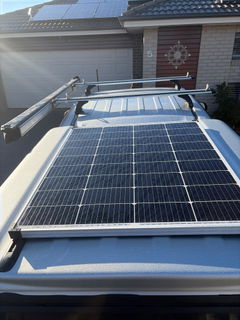
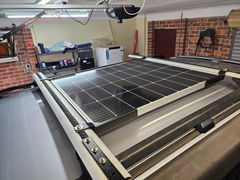
Charging With Solar Panels Can Be Iffy and Lengthy If you're dealing with an outage or you're otherwise off the grid, charging the power station via solar panels is your only option-and that's provided you have good sun and no obstructions.

They 're Not All That Portable

Portable power stations are about the size of an average microwave oven, but they're fairly heavy-most in our tests weigh more than 80 pounds.
That means you'll likely need an extra pair of hands to lift one into the trunk of your car. Some of the models come with wheels, but not all wheels are large in size, which makes rolling them across a lawn difficult.

If you have any questions about our products, feel free to call us at 02 888 10 333 and we will be happy to assist you.

Frequently Asked Questions

  • What size power station do I need?

    This depends on what you want to power and for how long. Check the wattage (W) of your devices and estimate usage time to determine the necessary capacity (Wh) and output power (W) of the station.

  • How do I connect a solar panel to my power station?

    Most power stations have a dedicated solar input port (often using an Anderson plug or similar connector). Simply plug your compatible solar panel into this port. Ensure the panel's voltage and wattage are within the station's specifications. Many units, like those from VoltX and Bluetti, feature built-in MPPT controllers for efficient solar charging.

  • What are the best power stations?

    The "best" power station depends on your individual needs and budget. Consider factors like capacity, power output, battery type (LiFePO4 is recommended for longevity and safety), portability, and features like UPS. Brands like VoltX, ACE, and Bluetti offer a range of quality options.

  • Can I use a power station indoors?

    Yes, battery-powered portable power stations are safe for indoor use as they don't produce fumes or emissions like traditional fuel generators.

  • How long does a LiFePO4 battery in a power station last?

    LiFePO4 batteries are known for their long lifespan, often rated for 2,000 to 3,500+ charge cycles before significant capacity degradation. For example, the VoltX E600 offers 3,000 cycles, and the Bluetti EP500Pro boasts 3,500+ cycles.

  • Are portable power stations noisy?

    No, they are very quiet, especially compared to petrol or diesel generators. They typically only have a quiet fan that runs when needed.

  • What devices can I run with a power station?

    This depends on the station's power output (Watts). Smaller units can charge phones, laptops, cameras, and run lights. Larger units (e.g., 1,200W+ like the VoltX Topband V1200 or 2,000W+ like the ACE M2000) can run small fridges, CPAP machines, TVs, and even some power tools. Always check your device's wattage.

  • How long does it take to recharge a power station?

    Recharge times vary based on the station's capacity and the charging method (AC wall, solar, car). Some models offer fast AC charging (e.g., VoltX Topband V1200 in about 2 hours). Solar charging depends on panel size and sunlight conditions.

  • Can I use a power station while it's charging?

    Many modern power stations support pass-through charging, meaning you can power devices from the station while it is simultaneously being recharged. Check the specifications for your chosen model.

  • Is an Outbax power station the same as an Outbax generator?

    Outbax power stations are battery-powered devices, offering silent, emission-free power. If you're looking for traditional fuel-powered generators, those are typically a different product category. Power stations are often seen as a modern, cleaner alternative to "generators" for many uses.

  • What's the difference between Wh (Watt-hours) and W (Watts)?

    Watt-hours (Wh) measure energy storage capacity (how much energy it holds). Watts (W) measure power output (how much power it can deliver at a given moment). You need enough Wh for your desired runtime and enough W to power your devices.

  • What is an Outbax portable power station, and what can I use it for in Australia?


    An Outbax portable power station is a rechargeable battery-powered device designed to provide AC, DC, and USB power on the go. In Australia, they are incredibly useful for camping, caravanning, outdoor activities, home backup during power outages, and powering tools remotely.

  • How do I select the correct size Outbax power station for my Aussie adventures?


    Consider the total wattage and Watt-hours (Wh) of the devices you plan to power simultaneously and for how long. A smaller-capacity Outbax power station might suffice for shorter trips or powering phones and lights. For longer trips or powering appliances like portable fridges, choose a higher-capacity model.

  • Can Outbax power stations be charged using solar panels, which are ideal for off-grid trips?


    Yes, many Outbax power stations are solar compatible, allowing you to recharge them using VoltX solar panels. This is perfect for extended camping or off-grid living in Australia, providing a sustainable and reliable power source. Check the specifications of individual Outbax models for solar charging compatibility.

  • What safety features are included in Outbax power stations for peace of mind?


    Outbax power stations are designed with multiple safety features, including overcharge protection, over-discharge protection, short circuit protection, and temperature control. These features ensure safe and reliable operation, giving you confidence in your power source.

  • What makes Outbax power stations a good choice for Australian conditions?

    Outbax power stations have robust components and designs to withstand the diverse and sometimes harsh Australian climate. They are engineered for portability, reliability, and ease of use, making them ideal for Aussie adventures and providing dependable power when and where you need it most.

VERIFIED CUSTOMERS RECOMMEND US