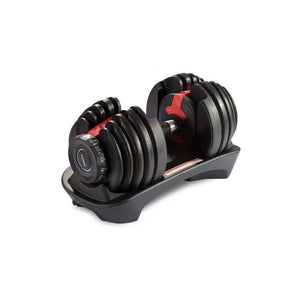
What is a dumbbell?
The dumbbell is a type of exercise equipment used in weight training. Specifically, dumbbells are weights used without exercise machines. Dumbbells are sometimes also called hand weights and free weights-those used “free” of such equipment.
Most dumbbells are designed with a narrow bar in the middle and two wider discs at each end. Some dumbbells are very light in weight (only a few pounds) while others are very heavy (50 pounds or more).
They can be fixed in weight or variable. Specifically, dumbbells can vary in weight due to discs that can be added or removed from the bar by quantity and size (weight). In addition, dumbbells can be used individually (a dumbbell in one hand) or in pairs (one in each hand).
The purpose of dumbbells is to strengthen the body and to tone the muscles, along with increasing their size. Bodybuilders, powerlifters, and other athletes often use them within their workouts or exercise routines. Various exercises have been created for the use of dumbbells, each designed to exercise a specific group of muscles.
As a group, dumbbell exercises, if performed properly and regularly within a comprehensive exercise routine, have the potential to help build broad shoulders, strong arms, shapely buttocks, large chest, strong legs, and well-defined abdominals.
Where did the term dumbbell come from?
The word “dumbbell” originated in England somewhere after the eighth century in reference to the practice of pulling the rope for the ringing of heavy church bells high in church steeples (“bell ringing”). It took much strength and practice to ring heavy church bells, so inexperienced bell ringers were taught without the use of the clappers within the bells (no doubt, so the sound of the bells would not aggravate people located near the churches). Some English people came to associate the word “dumb” for the noiseless ringing bells. Eventually, the apparatus used to practice bell ringing-the rope connected to a rounded metal weight (a clapper less bell)-came to be known as a “dumbbell.”
Later, around the sixteenth century, men found that they could improve their physique by working with these dumbbells attached to ropes. In the nineteenth century, the original rope and weighted bell-like object was replaced with a short bar and rounded weights on each end. These early dumbbells evolved over the next many centuries to the model used today.
Benefits of training with dumbbells
In most strength and bodybuilding training programme, the barbell is usually the preferred reference. When we talk about how you one can bench, squat or deadlift, we mean the exercises done using the barbell.
However, what many people do not know is that dumbbell training provides many advantages to athletes, bodybuilders and anybody that trains for general fitness. In many cases, dumbbell exercises are actually much better than its barbell counterparts:
1. Training with dumbbells will prevent the imbalance of strength and muscle development. Also enhance athletic performance, a significant consideration in fitness programs.
2. One huge benefit of training with dumbbells is that you can train one limb at a time. This can emphasize greater movement specificity in the training programs of athletes and greater program variety for bodybuilders.
3. Dumbbells are much safer when you work out alone without any spotter. With a dumbbell bench press, you can put the dumbbells to your sides without any problem at all.
4. Another safety benefit of dumbbell training is that it can prevent potential injuries in the shoulders, elbows and wrists. You can see the problem when comparing doing barbell curl or barbell bench press with dumbbell curl or dumbbell bench press.
5. Although dumbbells are simple devices for lifting weights when compared to the complicated machines and devices used in the modern-day gymnasiums and weight rooms, the dumbbell is considered by sports enthusiasts and sports researchers alike as one of the most effective ways to strengthen muscles and produce a powerful and muscular body.
All of our gym equipment is made from quality materials that are guaranteed to be safe, easy to use and will last for a long time.
If you have never tried ordering gym equipment online before, feel free to call us at 02 888 10 333 and ask questions about our products. We will be happy to assist you.
Frequently Asked Questions
- Am I motivated to use it?
- Is the advertising full of promises such as spot reduction or weight loss?
- Try the equipment out - IF possible?
- Is this gear the right size?
- Do I need the equipment or can I work the same muscles with other less expensive equipment?
- What's best for me, my family, and my home?
- Who will use the equipment?